From the F3DM to the ATTO 2 DM-i: BYD presents 18 years of evolution with the world’s best-selling plug-in hybrid technology
- With more than 7.7 million units produced, BYD leads the global transition towards sustainable mobility, as the world’s largest manufacturer of plug-in hybrid vehicles
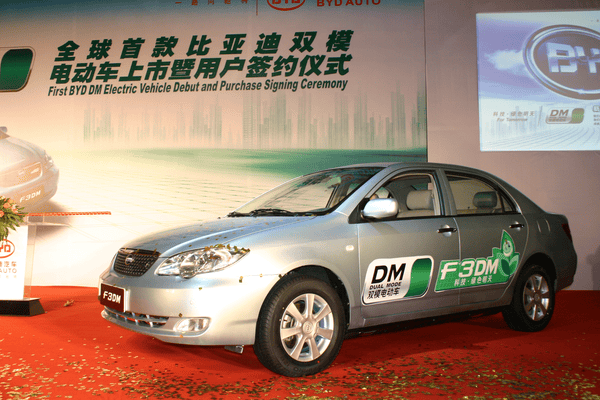
- BYD celebrates the coming of age of its ‘DM’ (Dual Mode) plug-in hybrid technology, first introduced in 2008 with the F3DM: the world’s first mass-produced PHEV car
- This DM technology is already available in three BYD models in the UK, with the ATTO 2 DM-i set to join the UK range in May
- The BYD plug-in hybrids currently on sale in the UK market offer total ranges (fully charged electric + fully fuelled thermally efficient petrol engine) of up to 631 miles* in the SEALION 5 DM-i, 699 miles* in the SEAL U DM-i and 935 miles* in the SEAL 6 DM-i. The Shark 6 pick-up truck will also launch later this year with DMO (the ‘O’ referencing Off-road)
- Dual Mode Innovation: the system integrates the 1.5-litre Xiaoyun engine with intelligent energy management to operate as an electric vehicle most of the time
18 March 2026 While the automotive industry was still debating the true viability of electrification in the late 2000s, BYD – already a leader in plug-in vehicles and battery technology – was charting its own course with a clear vision.
At the 2008 Geneva Motor Show, the company presented the world’s first mass-produced plug-in hybrid vehicle (PHEV) to the public: the BYD F3DM. Eighteen years on from this launch, BYD has grown to become the world’s leading manufacturer of plug-in hybrids, surpassing 7.7 million units produced.
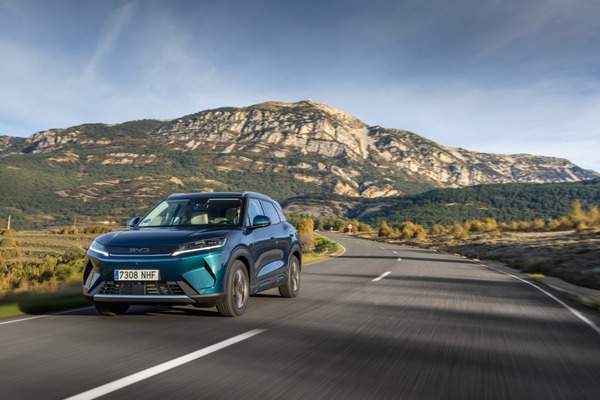
Nearly two decades after that debut, the brand has refined the technology even further with the ATTO 2 DM-i. This model, set to appear in UK showrooms in May, blends its appealing plug-in hybrid compact SUV design with 18 years of continuous evolution of its Dual Mode Intelligent technology, already a benchmark in larger models such as the SEALION 5, SEAL U and SEAL 6.
The technical progress achieved over this time reflects a maturity built on determination and an unprecedented R&D capability, with over 110,000 engineers. The motivation that has driven the company from the outset—the dream of using technology to change the world—meant that while much of the sector was still exploring theoretical concepts, BYD surprised audiences in 2008 with the pioneering F3DM’s 16 kWh battery. Based on the NEDC homologation cycle used in that era, it offered 37 miles of electric range and 280 miles total range.
This journey is not merely a succession of isolated mechanical milestones, but an evolution of innovation designed to improve people’s lives. The rate of improvement across the board is notable in charging speeds: from the more than seven hours of charging required by the production F3DM to replenish its battery, to the Blade Battery and intelligent management system in the ATTO 2 DM-i, which are compatible with a DC fast-charging system capable of replenishing the battery from 30% to 80% in just 26 minutes. All of this is combined with an electric-only range of up to 56 miles* combined, and a total range of up to 621 miles*.
DM-i TECHNOLOGY: CLASS-LEADING EFFICIENCY FOR THE REAL WORLD
Unlike conventional plug-in hybrids, where the internal combustion engine generally takes centre stage, in BYD’s DM-i models the petrol engine primarily acts as a generator, engaging directly only at higher speeds or when additional power is required. This approach enables many journeys in real-world conditions to be completed in zero-emissions mode.
The 1.5-litre Xiaoyun petrol engine delivers a record thermal efficiency of 43% and, together with one or more high-revving electric motors, automatically alternates between different modes to maximise efficiency:
- EV Mode: 100% electric drive, used most of the time in urban environments.
- HEV “Series” Mode: the Xiaoyun engine acts as a generator to charge the battery, while the electric motor drives the wheels, maintaining the smoothness of an EV.
- HEV “Parallel” Mode: in situations of high power demand, the petrol engine can connect directly to the wheels to support the electric motor.
This performance is underpinned by the brand’s fundamental pillar: the Blade Battery. Its lithium iron phosphate (LFP) chemistry, capable of successfully withstanding the demanding Nail Penetration Test, ensures superior thermal stability even under extreme conditions. In addition, like BYD’s fully electric models, Vehicle-to-Load (V2L) functionality is incorporated, enabling the vehicle to supply electricity to external devices—effectively transforming it into a mobile power source that adapts to the user’s lifestyle.
A GROWING FAMILY
In addition to the soon-to-be-launched BYD ATTO 2 DM-i, Dual Mode technology is currently available in the SEAL 6 DM-i and SEAL U DM-i ranges.
The new BYD ATTO 2 DM-i democratises plug-in hybrid technology in the compact SUV segment by prioritising electric driving through its Dual Mode system. In addition to its 56 miles* electric range in the combined cycle and total range of up to 621 miles*, it stands out for its spacious interior and generous standard specification typical of higher segments, including V2L technology, integrated Google connectivity and a comprehensive suite of driver assistance systems.
The SEALION 5 DM-i is BYD’s latest entrant to the family SUV market, delivering plug-in hybrid technology for the price of equivalent petrol rivals. It starts from £29,995, and offers up to 631 miles* of range, plus up to 53 miles* on electric power alone.
The SEAL 6 DM-i is available in both saloon and Touring estate body styles, with a total range of up to 935 miles*. In Touring specification, it offers a boot capacity of up to 1,535 litres with the rear seats folded down. The model achieved a five-star Euro NCAP rating, including an outstanding 92% score for adult occupant protection.
Meanwhile, the BYD SEAL U DM-i, the brand’s large family SUV, uses this platform to deliver impressive versatility, with ranges from 671 miles* in the Boost version (with an 18.3 kWh battery) to 699 miles* in the Comfort trim (with a 26.6 kWh battery). Maximum output is 218 PS in the Boost and Comfort versions, rising to 323 PS in the all-wheel-drive Design version.
FROM 20 EMPLOYEES TO A GLOBAL TECHNOLOGY GROUP
BYD’s history is one of unprecedented evolution. Founded in 1995 with just 20 employees, the company has grown into a high-tech multinational employing more than one million people, with a presence in 112 countries and the feat of generating an average of 45 patents per working day.
This innovative capacity has enabled BYD to bring plug-in hybrid technology to the mass market at a time when much of the industry was still keeping it in the experimental phase. From battery manufacturer to significant player across four major industries – automotive, electronics, renewable energy and rail transport – the brand has consolidated a position of leadership built on a legacy of innovation that began when electrification was in its infancy, and which today means that BYD is the global leader of plug-in vehicle sales.
*Ranges determined in accordance with the WLTP test procedure (Worldwide Harmonised Light Vehicle Test Procedure). Energy consumption, CO₂ emissions and a vehicle’s range do not depend solely on its technical characteristics or the condition of its batteries. These factors are also significantly affected by driving style, outside temperature, the use of comfort features (such as air conditioning or heating), topography and road conditions, vehicle load and even tyre pressure.
ENDS
-ENDS-
About BYD
BYD is a multinational high-tech company devoted to leveraging technological innovations for a better life. Founded in 1994 as a rechargeable battery maker, BYD now boasts a diverse business scope covering automobiles, rail transit, new energy, and electronics, with over 30 industrial parks in China, the United States, Canada, Japan, Brazil, Hungary, and India. From power acquisition and storage to its applications, BYD is dedicated to providing zero-emission energy solutions that reduce global reliance on fossil fuels. Its new energy vehicle footprint now covers six continents, over 100 countries and regions, and more than 400 cities. Listed in both Hong Kong and Shenzhen Stock Exchanges, the company is known to be a Fortune Global 500 enterprise that furnishes innovations in pursuit of a greener world. For more information, please visit www.bydglobal.com.
About BYD Auto
Founded in 2003, BYD Auto is the automotive subsidiary of BYD, a multinational high-tech company devoted to leveraging technological innovations for a better life. Aiming to accelerate the green transition of the global transportation sector, BYD Auto focuses on developing pure electric and plug-in hybrid vehicles. The company has mastered the core technologies of the entire industrial chain of new energy vehicles, such as batteries, electric motors, electronic controllers, and automotive-grade semiconductors. It has witnessed in recent years significant technological advancements, including the Blade Battery, the DM-i and DM-p hybrid technology, the e-Platform 3.0, the CTB and iTAC technologies, the DiSus Intelligent Body Control System, the XUANJI Architecture, and the Super e-Platform. The company is the world’s first carmaker to stop the production of fossil-fueled vehicles on EV shift and has remained top of new energy passenger vehicle sales in China for 12 years in a row.
About BYD Europe
BYD Europe is headquartered in the Netherlands and is the first overseas branch of BYD Group, with a commitment to evolving the international brand BYD Auto to deliver safe and efficient sustainable solutions in new energy vehicles through world-leading technological innovations.
For more information, please visit www.byd.com.
Contacts:
Mike Gale
Head of PR, BYD UK
E: michael.gale@byd.com
M: +44 7908 905678
Rachel Goodwin
PR Manager, BYD UK
E: rachel.goodwin@byd.com
M: +44 7399 678373
Alex Ingram
Press Officer, BYD UK
E: alex.ingram@byd.com
M: +44 7539 534571